25 October 2026
Peptide Pureness Overview 98%, 99% & Research-grade Clarified Prg
Presented by @archercdpn290
Peptide High Quality: Relevance Of Third-party Recognition
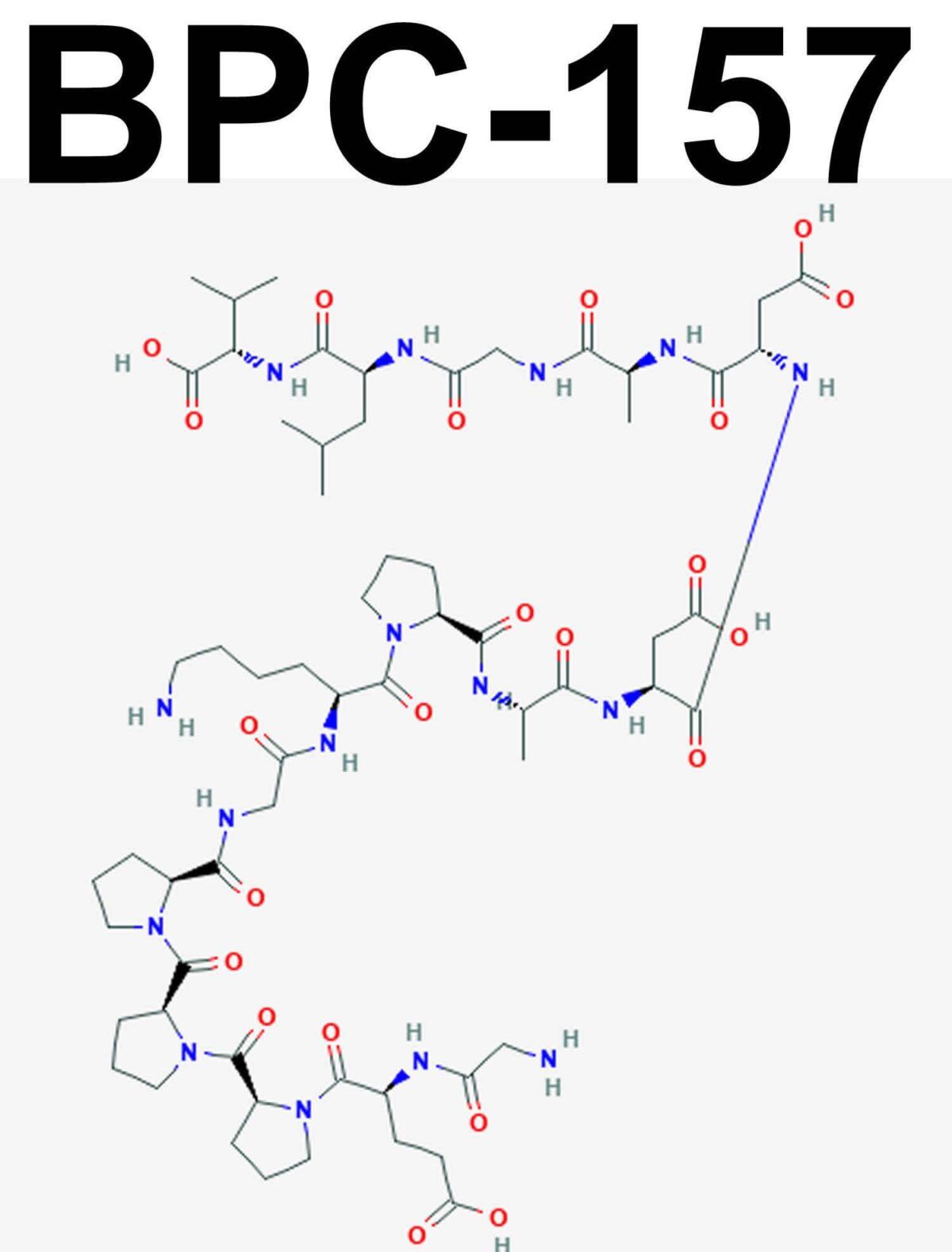
HPLC can support claims about chromatographic purity, contamination height problem, and destruction Check out this site fads when the method is ideal and the chromatogram is offered. If a peptide is re-tested after storage space tension, HPLC can expose whether brand-new contamination optimals have actually shown up or whether the major optimal area has actually decreased. This connects directly with managing topics such as peptide storage and peptide reconstitution. As an examples of product-level context, contrast the anticipated masses for Retatrutide, BPC-157, and Semaglutide.- Many thanks to our exceptional researchers and powerful mass spectrometry platform, we off gives worldwide customer with comprehensive and specialist peptide purity analysis solution by using RP-HPLC.
- It separates the components of a sample based upon their differential affinity for a stationary stage (column packing product) and a mobile stage (solvent system moving with the column).
- In concentration-response experiments, these pollutants can shift contours, flatten plateaus, or introduce biphasic behavior that obscures the true task of the target compound.
- These evaluations are valuable when customers require more than a mass spectrum and chromatogram to evaluate whether a whole lot is truly fit for quantitative job.
- Due to the fact that peptides are produced with intricate chemical processes, trace impurities can develop naturally.
Kinds Of Impurities Hplc Detects
Really few commercial research peptide suppliers offer MS/MS information on regular COAs-- it is usually scheduled for pharmaceutical-grade materials and advanced research settings. Nonetheless, some costs suppliers do offer it on request for critical batches. If series confirmation is crucial for your research study, this is the analysis to demand. It divides the parts of an example based upon their differential affinity for a stationary phase (column packaging product) and a mobile phase (solvent system relocating through the column). Peptides, with lengthy molecular series and diverse conformations, existing obstacles for framework confirmation and material determination. BOC Sciences leverages high-resolution mass spectrometry, LC-MS/MS, and NMR to properly evaluate molecular frameworks and provide very delicate quantitative assistance.
If the COA provides "overall impurities", that complements the pureness number (e.g., 98% pureness implies 2% total pollutants). Several COAs likewise define well-known or "defined pollutants" versus undefined ones, each with their private percentages if over a particular threshold. This level of detail assists scientists recognize if any minor peptide by-products exist. If you see multiple big peaks of comparable height, you're considering either a low-purity example or a mixture. If the main height has a noticeable "shoulder"-- a bump on one side-- that typically shows a carefully relevant pollutant (like a removal peptide) that the column couldn't fully solve. The peptide is passed through a straightforward filtration action (often gel filtration or a quick reversed-phase clean-up) to eliminate salts, small-molecule byproducts, and scavengers from the bosom action.
What Peptide Testing Can And Can Not Confirm
For scientists, acquiring verified peptides isn't simply a formality-- it's the structure of dependable experiments and research reproducibility. Poor-quality peptides (those with unseen pollutants, incorrect series, or deteriorated elements) can lead to deceptive information and irreproducible results. In fact, proteins and peptides are among the most widely used laboratory reagents, yet researches have actually revealed that their top quality is usually insufficient, leading to bad information reproducibility. Beginning with appropriate research laboratory recognition is therefore a vital part of a scientist's quality control workflow.
The top quality and dependability of a peptide purity measurement depend upon approach parameters and documents top quality. The mobile phase, frequently a mix of water, acetonitrile, and an acid modifier, is saved in tanks and supplied with the system by a high-pressure pump. The pump preserves accurate circulation prices, typically in the series of 0.5 to 2.0 mL/min depending on the method and column style. High stress requires the mobile phase via firmly loaded fragments inside the column, creating sharper separations and higher resolution than standard low-pressure chromatography.Customized Peptides
They are identified "for research usage only" to make clear that they are intended for artificial insemination experiments or animal researches, except any type of human usage. In fact, a lab offering peptide testing need to provide information fulfilling the rigorous logical assumptions of companies like FDA and EMA [4] By using a certified third-party laboratory, peptide manufacturers or scientists guarantee an honest and skillfully recorded analysis of quality, which is precisely what assessors look for. Furthermore, recurring independent testing supports conformity in batch launch and quality assurance. Research laboratory recognition for peptides suggests making use of clinical tests to confirm a peptide's identity, pureness, and structure. In practice, this commonly entails third-party or independent testing by an external lab to validate that a peptide item in fact contains what the tag claims [2]The software program draws borders around each height and determines the area underneath. The purity portion originates from comparing the location of the major optimal to the overall area of all identified heights. Most reports consist of a table listing each top's retention time, area, and percent of overall area.
One of the Peptide Stability most rigid quality, entailing cautious HPLC purification-- in some cases multiple rounds-- and rigorous QC. Needed for measurable research studies, structural biology, in vivo research study versions, and any kind of application where even percentages of impurity could impact results. This is the quality where the cost increases most dramatically, due to the fact that achieving that last 1-- 3% of purity needs discarding a significant portion of the manufactured material. A deletion peptide missing a solitary deposit might still bind to the same receptor, however with different fondness or selectivity. In concentration-response experiments, these pollutants can change contours, flatten plateaus, or present biphasic behavior that covers real activity of the target compound. The isoelectric point (masterpiece) is a critical parameter for comprehending peptide solubility and behavior in numerous settings.